

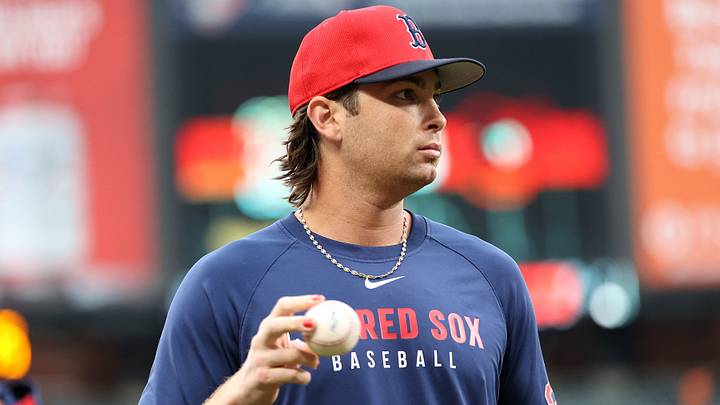
Triston Casas was almost certainly a goner. The experts had named him as a top non-tender candidate. We were sure that he had played his last game in a Boston Red Sox uniform. Then, the November 20 non-tender deadline came and went, and Casas was left standing.
If for no other reason, and there are other reasons, it seemed as if Casas' injury history would seal his fate. Rib, knee and wrist injuries have plagued him. The once-promising first baseman has suffered maladies up and down his body.
With all that in mind, the only upside to cutting Casas loose would've been gaining a roster spot. That has value, but when one really thinks about it, there was more to lose by letting him go than there was to gain.
Red Sox tendering every remaining arbitration-eligible player including Jarren Duran, Tanner Houck, Kutter Crawford, Johan Oviedo, Triston Casas, sources tell me and @Sean_McAdam.
— Chris Cotillo (@ChrisCotillo) November 20, 2026
There are several ways that the Red Sox can benefit from keeping Triston Casas now that the non-tender deadline has passed
First, Casas is signed for cheap. He's projected to make just $1.7 million in arbitration, which is chump change in the grand scheme of things. That paltry sum isn't going to prevent the Red Sox from making any moves to improve the club that they want, so there was no financial incentive to show him the door.
Casas also has team control through 2028. It was hard to imagine how he'd get playing time in 2027 with Willson Contreras and Masataka Yoshida on the roster, and now, with Jake Bauers in the mix, it seems downright impossible unless Boston suffers a disastrous rash of injuries.
However, the Red Sox can move on from Contreras after 2027, and Yoshida will be a free agent, too, if Boston doesn't find a way to move on from him before then. That will loosen things up. It seems that Boston has a plan for Contreras and Bauers to coexist during the upcoming season, so there's no reason that a healthy and productive Casas can't fit next to Bauers in 2028.
Casas also has all three minor league options remaining. He'll be playing winter ball in the Dominican Republic to start knocking off the rust, and from there, the Red Sox can stash him in Worcester to fully regain his form.
Triston Casas is expected to play for Tigres del Licey in the Dominican Winter League and will report in the next few days 👏
— Tyler Milliken (@tylermilliken_) November 10, 2026
Hasn’t played in any type of game since 5/2/2025. It’s been 4 years since he last spent time with Licey.
(@BGlobeSports) pic.twitter.com/lS5SLm9O2Z
That's huge because it means that while he occupies a 40-man roster spot, he won't necessarily clog up the 26-man roster and instead can hang out in Triple-A to work his way back slowly while also serving as valuable depth should injuries arrive.
Lastly, if he really takes off in the minors, it could spark renewed trade interest come the trade deadline. A cheap, controllable power bat has value, and if Casas can stay healthy and bounce back, he's exactly that.
So, in the end, the value he presented to the Red Sox via all of these potential avenues is far greater than the benefit they get by letting him go. It didn't seem likely, but keeping Casas was the right call. The worst-case scenario is that they end up non-tendering him next year if things don't work out. Boston has nothing to lose and everything to gain.
 Add us as a preferred source on Google