

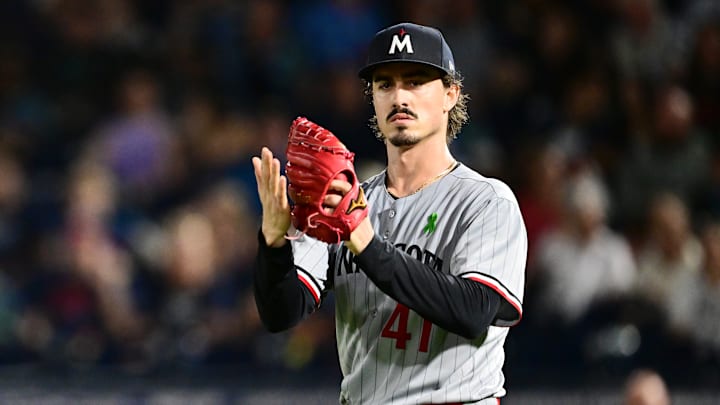
Boston Red Sox fans entered the 2025-26 offseason with massive expectations for the club's improvements. A trade for Minnesota Twins All-Star starter Joe Ryan was high on the list.
But with spring training just weeks away and Boston's rotation fully reinforced by other moves, Ryan won't be coming to Boston this year. It makes the failed reports of the deal at the 2025 trade deadline hurt even more, but the Sox's rotation is still more than staffed for the upcoming season.
The hopes for a Ryan trade aren't dead yet, though. Sonny Gray is entering the final year of his contract and it's hard to imagine the Red Sox bringing him back after his age-36 campaign, no matter how well it goes. Boston could be in the market for another top-of-the-rotation arm again next winter, and it just got a better idea of what it may cost to bring him in.
Ryan was one of 18 players who didn't settle their 2026 salary with their club before the arbitration deadline. The two sides could've gone to an arbitration hearing (which is, by all accounts, an uncomfortable process), but they settled on January 26, before the trial was scheduled to occur.
Former (and maybe future) Red Sox trade target Joe Ryan settles with Twins before expected arbitration hearing
Ryan will make $6.2 million guaranteed in 2026 with a $100 thousand buyout on a $13 million mutual option for 2027. Mutual options are almost never approved by both parties in a contract, and even if it isn't, Ryan is still under team control through next year.
If Minnesota completely changes its approach to this offseason in the final weeks before spring training, the Red Sox could easily accommodate Ryan's $6.2 million salary for the coming year. Boston is more than stocked with starting pitchers, however, so a trade seems quite unlikely, especially now that offense is the front office's main focus.
If the Twins and Ryan somehow agree to the $13 million option, the Red Sox would be on the hook for that amount after potentially trading for him next year. Since he'll only have one year on his contract at that point, his price on the trade market will be less than Minnesota demanded at the trade deadline when he had over two years of control remaining. If the two sides don't agree — by far the most likely outcome — Ryan will have to re-negotiate a new deal in arbitration next year.
 Add us as a preferred source on Google