

The Boston Red Sox's offense entered the postseason on a sour note. Boston was the lowest scoring team in the league in September, it had the lowest batting average and lowest OPS as well.
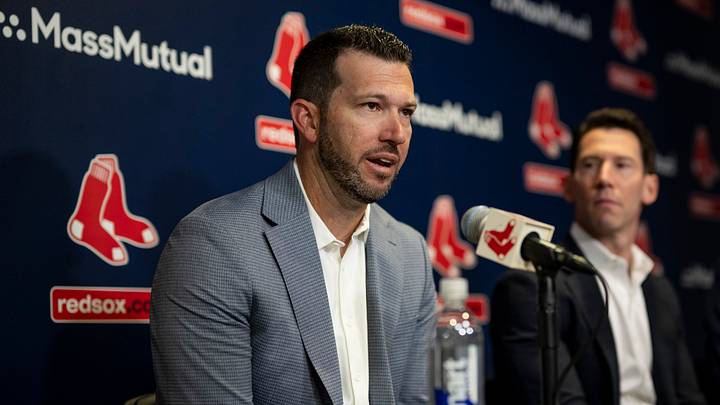
But even if the Sox came in hot, they would've struggled in the playoffs on their side of the bracket. The New York Yankees is one of the best pitching teams in the laegue with home run power and the Tampa Bay Rays were the best team in the American League all season. In Boston's end-of-season press conference, Chief Baseball Officer Craig Breslow highlighted some of the biggest issues with his club's offensive production.
"Our offense was inconsistent and we got on base at a decent clip but we didn't really slug, we didn't hit a ton of home runs, and I'm not sure that we took advantage of the unique venue that we play in," Breslow said.
The Red Sox noted that they would make an effort to improve the offense in the areas it struggled this season, but maximizing the benefit of playing half of their games in Fenway Park was never a goal of this season — Boston actually did the opposite.
Red Sox's "run prevention" strategy came back to haunt them with lame offense, lack of advantage in Fenway Park
The Red Sox went with a "run prevention" strategy when building their roster this season, and by and large, it worked. Their pitching staff, fronted by a dominant, revamped starting rotation without the help of Garrett Crochet, allowed the third-fewest runs this season (566), tied with the Los Angeles Dodgers. Keeping the ball inside Fenway Park so well is quite an achievement.
But preventing runs is only an efficient game-winning method if the offense can consistently score more runs than its pitchers give up. Besides their 35-5 stretch over the summer, the Red Sox's lineup couldn't reliably string enough hits together to win games when they were down by two or three runs. They also didn't hit enough home runs (162 all season, the fourth-fewest in the league) to score on one swing or capitalize with runners on base as well as their competitors.
Fenway Park is one of the most hitter-friendly parks in the league. The Green Monster often helps the Red Sox lead the league in doubles while giving them a defensive advantage because their outfielders play in front of it so often. Right-handed power hitters can easily clear the Monster, and at its closest, the left field wall is 302 feet from home plate. Breslow didn't sign anyone to truly take advantage of the benefit of playing at Fenway despite having multiple chances to do so — Alex Bregman, Pete Alonso or Kyle Schwarber would've been great options. This isn't to discredit Willson Contreras' contributions and his 27 homers were definitely critical, but in the AL East, baseball's most competitive division, up against teams like the New York Yankees, the Red Sox need more home run threats.
Playing to the advantages of Fenway Park was never the Red Sox's plan and it came back to haunt them when it counted. Quality pitching and defense are important, but at the end of the day, the team with the most runs on the scoreboard wins. A good offense is the best defense, but Breslow doesn't run the Red Sox that way. If he wants his team to make a longer run next season, he must change his approach.
 Add us as a preferred source on Google