

The Boston Red Sox were initially viewed as massive "winners" of the World Baseball Classic in terms of seeing their players perform like stars in the tournament. Nearly all of Boston's players in the WBC — with the exception of Ceddanne Rafaela and Ranger Suárez — played well and made real contributions for their respective countries.
Some guys flat-out dominated. Roman Anthony made the All-Tournament team. Jarren Duran hit three homers for Team Mexico. Wilyer Abreu hit the biggest two homers of the tournament and took home the title for Team Veneuela alongside his fellow Red Sox/countrymen, Willson Contreras and Suárez.
But are the Red Sox now paying the cost of having so many guys exert themselves in the WBC? Is this a real factor contributing to Boston's bad start to the season? NESN's Tom Caron unpacked that question on Tuesday.
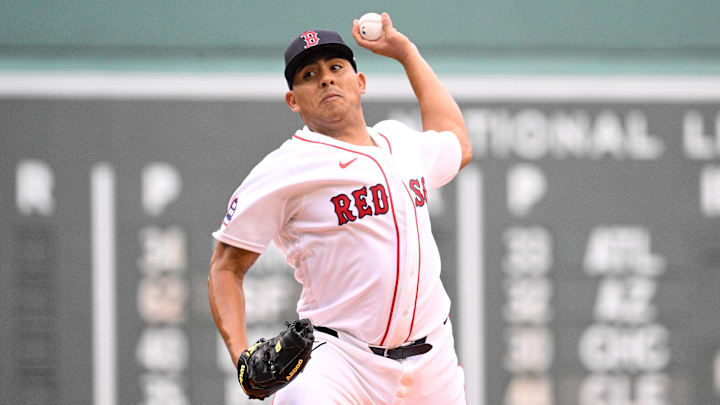
The first valid point that Caron made pertains to Suárez. He flat-out didn't get enough innings in spring training due to his participation in the WBC. Suárez struggled in the tournament, and he hasn't been himself to begin the regular season. Suárez was awesome in his third start of the year on April 11, throwing six innings of shutout, three-hit baseball in St. Louis. But his first two starts were ugly — eight earned runs over a combined 8 1 /3 innings.
The WBC isn't close to being one of the Red Sox's biggest problems
Did the Red Sox have TOO many players in the WBC, and have there been long term effects?
— NESN (@NESN) April 14, 2026
🎙️ @TomCaron
⚾ https://t.co/431oS6mqdA pic.twitter.com/eAkGQjHAWN
Caron's other point was about team chemistry. He argued that the Red Sox weren't able to build up proper chemistry during spring training because they had "too many guys" away at the WBC.
This second point from Caron isn't as strong. While Boston may have sent more players to the tournament than many other teams, the fact of the matter is that all MLB teams had guys away at the WBC and suffered a different spring training experience as a result.
Moreover, there isn't an obvious correlation between a high number of WBC players and a lack of team success in 2026. The Pittsburgh Pirates had 14 players in the tournament; the San Diego Padres had 11 — both teams have gotten off to strong starts with top-5 records in all of baseball. Sure, part of the Red Sox's early struggles can be attributed to WBC burnout, but that's not a viable excuse, nor does it fully explain Boston's poor record. There are plenty of other issues.
In essence, there were no lies detected in Caron's remarks, but he might be leaning in too much to the idea of the WBC being a significant issue worth guarding against in the future. It's a difficult tightrope to walk, because you don't want to take away the experience from a guy like Anthony or Abreu, who can legitimately enhance their long-term value to the Red Sox by gaining confidence and big-game experience in the WBC. On the other hand, it's harder to discern the value to the Red Sox of an older player like Suárez messing up his spring training reps due to the tournament.
Really, the consequences of the WBC on regular-season performance — good and bad — are unique to each player. It's difficult to quantify or measure the costs and benefits as an overall team, and it's much easier to generally accept that the tournament is a great thing for the sport and most of the players who participate, which means it should continue to take precedence.
 Add us as a preferred source on Google