

The 2026 season is still young, and it's been reflected in the Boston Red Sox's play. Boston's bats are almost nowhere to be found since Opening Day, and the pitching (besides Garrett Crochet, of course) hasn't been anything to write home about, either.
Much like the season, MLB's ABS system is also new. Pitchers and hitters finally have the chance to challenge questionable calls from umpires behind the plate, and some teams have made great use of the system so far. The Red Sox aren't one of them.
Don't get us wrong, they've had their moments with ABS, like Roman Anthony's game-changing challenge on Opening Day — in the ninth inning, Anthony challenged a low strike call that ended up being overturned to extend the inning with two outs on the board. Trevor Story and Jarren Duran followed with RBI singles to give the Red Sox two insurance runs to cement their victory.
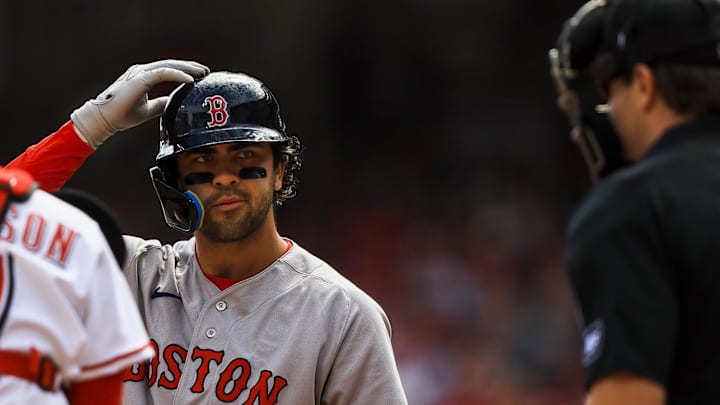
Since March 26, Boston has used its challenges much less economically. The Red Sox infamously sacrificed all their challenges in the third inning of a game umpired by C. B. Bucknor, and the rest of the game was brutal to watch. The Cincinnati Reds, meanwhile, made excellent use of their challenges, and although they didn't directly help them win, the two consecutive helmet-taps by Eugenio Suárez were incredibly entertaining to watch.
The Red Sox have made four correct challenges on nine attempts this season (through March 30), a middle-of-the-pack success rate so far among all teams in MLB. Some of their decisions have been outright nonsensical, and when their offense finally shows up and they have a chance to win, they can't afford for their choices to come back to bite them.
Red Sox need to use their ABS challenges better before they make another huge, game-changing mistake
Boston needs to place some restrictions on who can challenge and when. In the fourth inning of the Red Sox's March 29 game, Marcelo Mayer tapped his helmet to dispute a strike call and ended up being incorrect. Not only does he not yet know the zone well enough to challenge (30.1 strikeout percentage last season, four strikeouts in four games so far), a correct call would've turned the lineup over to Connor Wong, who is far from reliable offensively.
Against the Houston Astros on March 30, Carlos Narváez challenged a borderline ball, willing it to turn into a strike. He was also incorrect, but he shouldn't have challenged in that situation in the first place — it was the fourth inning in a 1-2 count and the ball wasn't far enough outside to dispute so confidently, as the result shows.
In the second game of the Houston series, Ceddanne Rafaela inexplicably challenged a called strike on the inside line. It was the third inning, and it was the first pitch he saw — worst of all, he was wrong.
The Red Sox should save their challenges for the later innings, unless the umpire's call is terrible. Boston hasn't had much success hitting against starters so far and its scoring chances have come later in games, sometimes after it's burned a challenge or two. Using a challenge late in the game becomes much riskier if the Red Sox only have one left because of a marginal strike call in the third inning.
Until the Red Sox become more confident in their ABS use, they also need to stick to horrible calls. There are more than enough egregious calls they can challenge, there's no need to challenge a strike call on the corner, especially when the Red Sox have shown so far that they don't know where the strike zone is.
Boston has learned early that reckless challenging can cost it games. A new season brings many challenges and the ABS system is one of the most unique ones yet, but the Red Sox need to stick to playing decent baseball before they continue burning challenges unnecessarily.
 Add us as a preferred source on Google